Jul
KIU Students Participate in Academy for Impact Women Mentorship Initiative Training
July 21, 2026, 8:57 am
 Agnes Kiconco
• March 26, 2026, 8:39 am
Agnes Kiconco
• March 26, 2026, 8:39 am 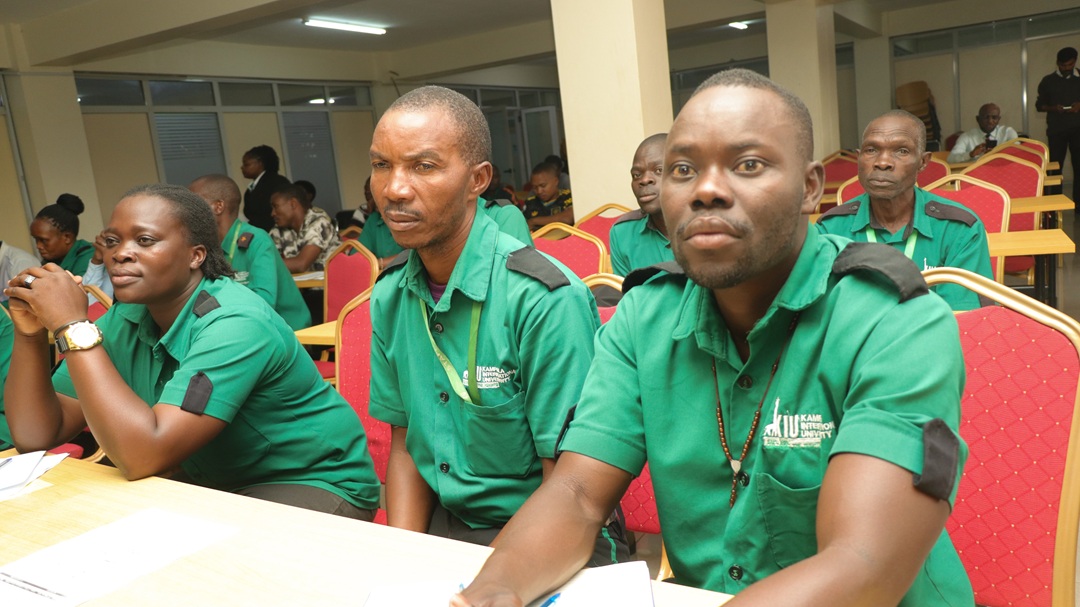
KIU, Main Campus - On Wednesday, 25th March 2026, Kampala International University (KIU) Main Campus hosted a Security Staff Training Workshop aimed at equipping its security personnel with modern skills to safeguard the university community. The workshop brought together senior administrators, law experts, ICT professionals, and security leaders, all emphasizing the shared responsibility of maintaining safety in academic institutions.

Dr. Jacob Eneji Ashibi, Acting Deputy Vice-Chancellor of Academic Affairs, opened the workshop on behalf of the Vice-Chancellor. He conveyed the Vice-Chancellor’s warm regards and reaffirmed KIU’s commitment to providing a safe and conducive environment for learning, teaching, and research. He emphasized the importance of intelligence-led policing, urging security staff to be proactive rather than reactive, and to build trust through vigilance, communication, and collaboration.
Speaking through Dr. Ashibi, the Vice-Chancellor noted: “Security is not simply about presence or reaction. It is about preparedness, professionalism, and proactive engagement. Our goal is to anticipate threats, prevent incidents before they occur, and build trust within our university community.”
Dr. Esther Kisubi, Dean of the School of Law, presented on “Workplace Violence Prevention and Conflict Management: Legal and Ethical Considerations in Workplace Safety.” She reminded participants that workplace safety is everyone’s responsibility, highlighting causes of workplace violence such as poor management practices, stress, job insecurity, and power imbalances. She outlined strategies including communication, mediation, leadership intervention, and teamwork, while reminding participants of the protections available under Uganda’s Employment Act.
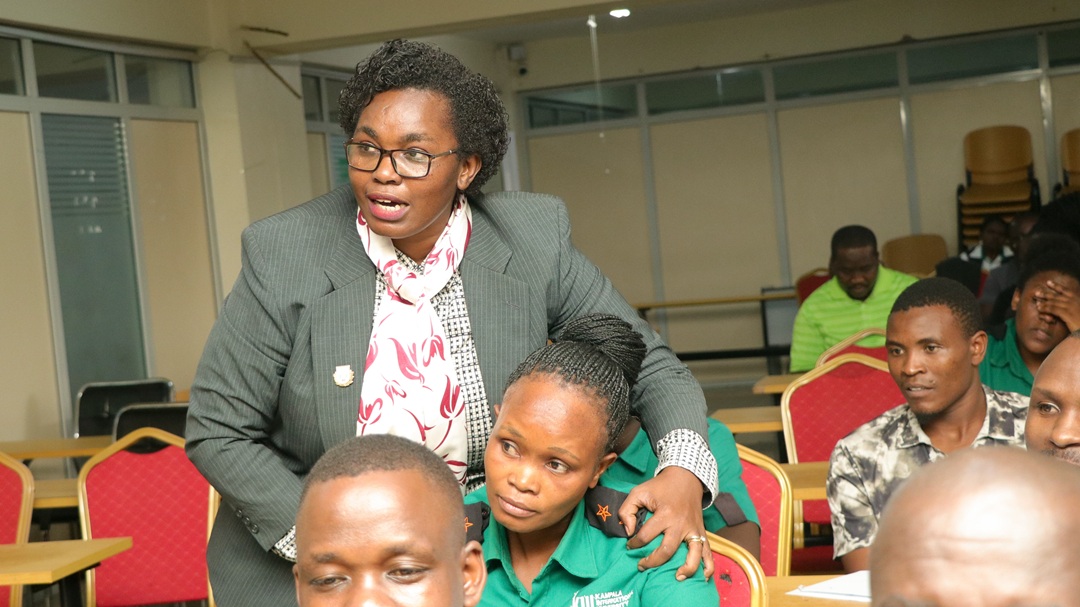
Dr. Kisubi emphasized: “Respect and communication are the foundation of workplace safety. How we speak to one another matters, especially in security roles where tone can either defuse or escalate situations.”
SSP Turyahabwe Asanasio, Deputy Commandant, Technical Services Counter Terrorism, shared insights from his experience as a Chief Security Officer at a government university. He stressed that security is dynamic and must be proactive. He categorized threats into physical (theft, arson, terrorism), emotional (harassment, sexual offences), and digital (cyberattacks, hacking). He urged officers to anticipate risks, identify vulnerabilities, and empower individuals to be vigilant, noting that preparedness and foresight are the foundation of effective security.
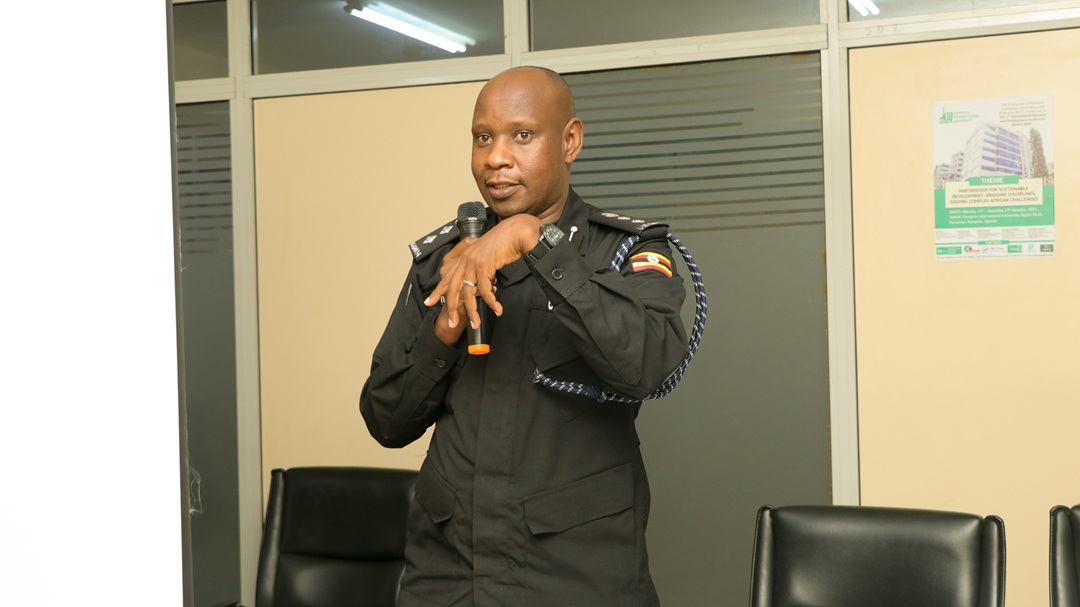
“Security is dynamic—it is not just the officer at the gate, but a responsibility shared by everyone in the institution. We must move from being reactive to being proactive: identifying threats early, assessing risks, and implementing measures before incidents occur. Preparedness and vigilance are the true foundations of effective security.”
Engr. Assoc. Prof. Ibrahim Sani Madugu, Director of ICT, addressed the growing importance of cybersecurity. He outlined common threats such as malware, phishing, password breaches, hacking, data theft, denial of service attacks, and insider misuse of access privileges. He emphasized mitigation measures including strong authentication, regular software updates, user awareness training, encryption, access controls, incident response planning, and secure backups.
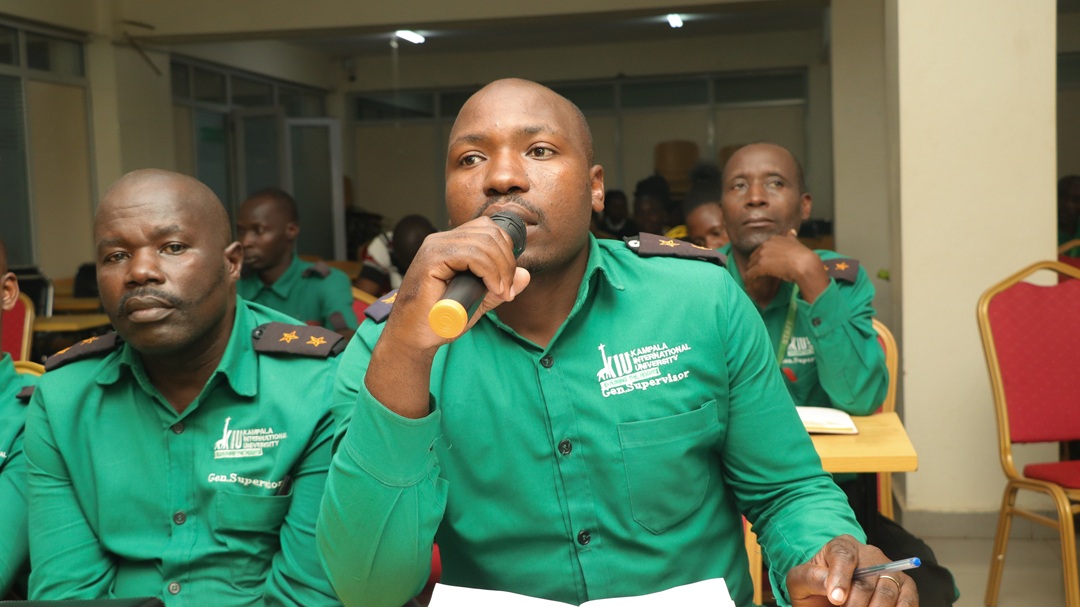
His key message was clear: cybersecurity is not just an ICT issue—it is everyone’s responsibility. By combining technology, awareness, and collaboration, the university community can safeguard its digital environment.
In her closing remarks, Christine Ainebyoona, Deputy University Secretary, thanked the security staff for their dedication and urged them to embrace teamwork and responsibility. “We all need each other,” she said. “Security is not the responsibility of one person—it is a shared duty. Each of us must be responsible not only for ourselves but also for one another. When we work together, coordinate, and support each other, we create a safer and stronger Kampala International University.” She encouraged participants to carry forward the lessons learned, remain vigilant, and uphold professionalism in their daily duties.
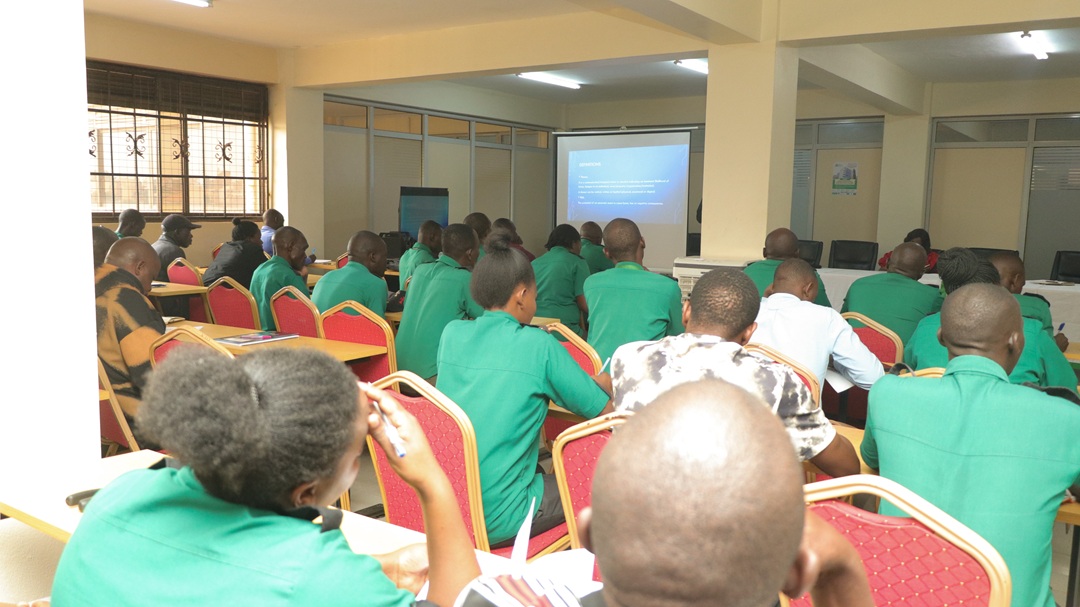
The workshop concluded with renewed commitment from KIU’s security personnel to uphold professionalism, strengthen collaboration, and proactively safeguard both the physical and digital environment of the university.
Kampala International University, Box 20000, Ggaba Road, Kansanga, Kampala
+256-760 502660
+256-700 100808