Prevention of Adverse Drug Reactions in Patients with Chronic Kidney Disease
Chronic Kidney Disease, an Escalating Global Health Challenge
Kidney disease is accountable for an estimated 1.3 million fatalities each year, positioning it as the tenth most prevalent cause of mortality on a global scale. The diagnosis of chronic kidney disease (CKD) is established when the estimated glomerular filtration rate (GFR) falls below 60 ml/min/m3. CKD, with a worldwide prevalence ranging from 11% to 13%, is an escalating public health issue. The prevalence of renal impairment is increasing in Sub-Saharan Africa and Uganda. CKD patients are at increased risk of DRPs including adverse drug reaction (ADR).
Prioritizing Patients with Chronic Kidney Disease in prevention of Adverse Drug Reactions
An ADR refers to any unanticipated and harmful consequence of drugs that manifests at typical dosage levels. Patients with CKD are at a significantly higher risk of adverse drug reactions (ADRs) compared to the general population. ADRs cause up to 20% of hospitalizations in CKD patients. Mortality due to ADRs is 2–3 times higher in CKD compared to patients with normal kidney function. The level of renal impairment is substantially linked to mortality following an ADR. The implementation of medication therapy management (MTM) led by pharmacists has demonstrated efficacy in the prevention of ADRs among patients with CKD elsewhere. MTM services have the potential to enhance medication adherence, reduce healthcare expenditures, and enhance the quality of life (QoL) for those diagnosed with CKD. MTM consists of five distinct steps: medication therapy review (MTR), personal medication record (PMR), medication-related action plan (MAP), intervention or referral, and paperwork.
- To identify the gaps in renal dosage adjustment and monitoring practice for ADRs in patients with CKD.
- To determine the effectiveness of pharmacist-led MTM interventions in reducing the burden of ADR in patients with CKD.
Optimization of prescribing and mitigation of ADR burden in patients with CKD: A locally relevant and acceptable medication prescribing protocol in patients with CKD will be developed, and validated resulting in;
- Reduced incidence of ADR
- Higher adherence to guidelines
- Reduced ADR related morbidity and mortality
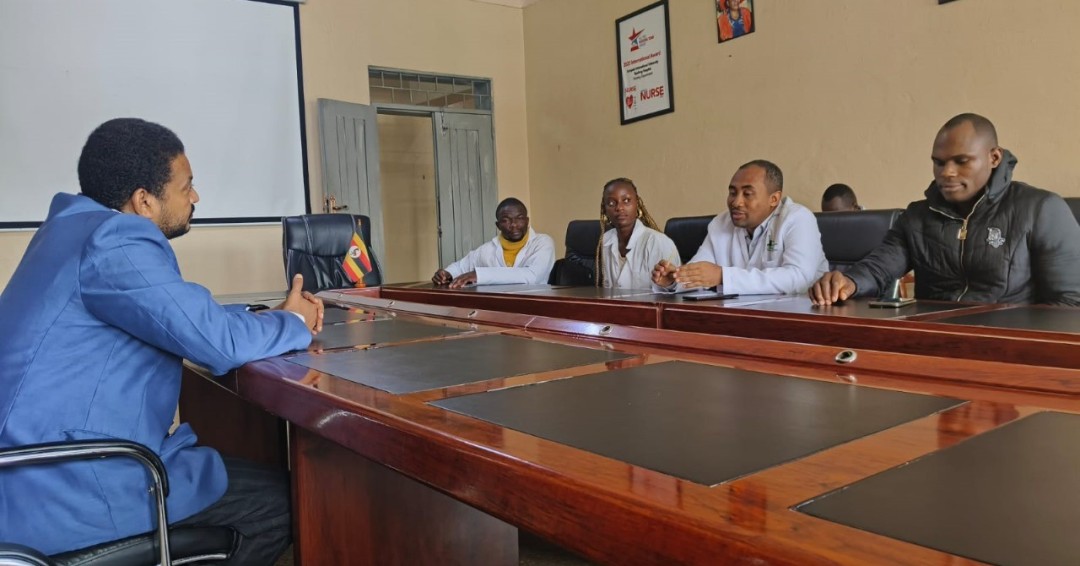
The project was launched on 17th March 2025 at Kampala International University Teaching Hospital (KIUTH) in the presence of the research team, the hospital’s CEO, Deputy CEO, heads of hospital departments and other stakeholders.
Two phases
- Study one: A baseline cross-sectional study involving 200 patients with CKD
- Study-two: A prospective interventional study among 200 patients with CKD
Prevention of Adverse Drug Reactions in Patients with Chronic Kidney Disease
Acronym: PADRKD
We are very grateful to RSTMH and NIHR for their support in funding this project.
- Dr. Tadele Mekuriya Yadesa (School of Pharmacy, KIU-WC) - PI
- Dr. Umi Omar (KIUTH) - Clinician
- Dr Alrazi Eisa Shogar (School of Pharmacy, KIU-WC) - Clinician
- Dr. Nuru Mugide (KIUTH) - Supervisor
Engagements
Important Links
Other Links
Our Contacts
Kampala International University, Box 20000, Ggaba Road, Kansanga, Kampala
+256-760 502660
+256-700 100808